Lincolnshire Knee Clinic
Treatments

Physiotherapy & Rehabilitation

Targeted exercise, muscle strengthening, and joint mobilization programs designed to restore knee function.

On this page

Overview

Physiotherapy and rehabilitation are fundamental to managing most knee conditions. This page explains what physiotherapy involves, who may benefit, and how it is customized to individual goals.

Physiotherapy involves the clinical application of targeted exercises, stretching, manual therapy, and movement correction to optimize joint biomechanics, restore range of motion, and strengthen the supporting musculature around the knee. Wording is cautious: suitability and outcomes depend on individual diagnosis, consistency, and active participation.
This information is for general patient education and does not replace an individual clinical assessment. Suitability and outcomes depend on joint condition and physical health.

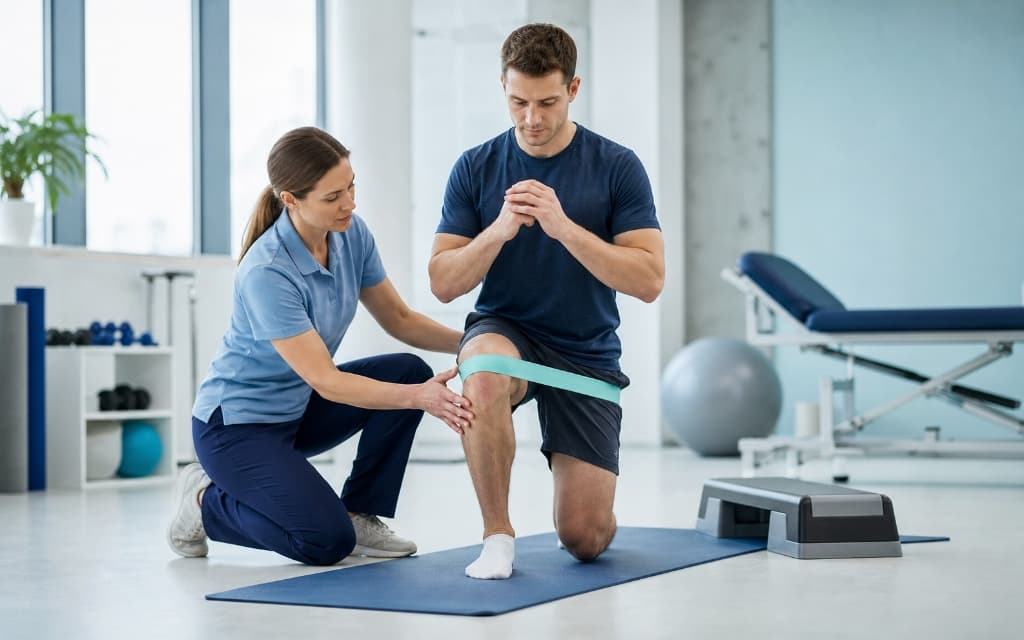
Clinical Overview Illustration

Infographic displaying progressive knee exercises: range of motion, isometric quad sets, and balance training.
The structured phases of conservative physiotherapy and progressive strengthening..

What does this treatment involve?

Typical clinical stages of this treatment pathway include:

1Clinical assessment of knee range of motion, muscle strength, and gait
2Tailored exercise program focusing on quadriceps, hamstring, and gluteal strengthening
3Proprioception and balance training to restore joint stability and position sense
4Manual therapy techniques to reduce stiffness and improve joint mobility
5Progressive loading strategies to safely return to daily activities or sport

Suitability

Suitability depends entirely on an individual clinical examination, diagnostic imaging, medical history, and personal activity goals.

Who may benefit?

  • Patients with knee osteoarthritis experiencing mild to moderate pain
  • Individuals recovering from acute sprains or ligament strains
  • Before and after surgical procedures to optimize recovery potential
  • Patients with patellofemoral tracking or biomechanical issues

When might it not be suitable?

  • Patients with acute fractures or joint dislocations prior to stabilization
  • Severe mechanical blocks (true joint locking) requiring surgical release
  • Severe joint infection or acute inflammatory flare-ups requiring urgent medical care

Alternatives

Alternative treatment pathways that may be considered depending on clinical severity:

Activity modification and load managementExplore Option >
Knee bracing and orthotic supportExplore Option >
Pain-relieving medication or joint injectionsExplore Option >
Surgical intervention for structural or mechanical defectsExplore Option >

Risks

As with any clinical intervention, risks and complications differ between patients. Suitability and risk profiles are discussed in detail during consultation. General risks associated with this procedure include:

Temporary increase in muscle soreness or joint pain following exercises
Local swelling if load is progressed too rapidly relative to joint capacity
Risk of minor muscle strains if exercises are performed with incorrect technique

Recovery & Rehabilitation

Post-treatment rehabilitation and timelines are key to restoring joint health. We do not provide guaranteed recovery times.

Immediate Recovery

  • Expect some post-exercise fatigue or mild aching in the early phases
  • Compliance with home exercises is a key driver of recovery timelines
  • Rehabilitation is typically a gradual process over weeks to months

Rehabilitation Pathway

  • Initial phase: focus on swelling control and restoring range of motion
  • Strength phase: focus on progressive resistance training for the lower limb
  • Functional phase: return to sport or work-specific movement drills
Rehabilitation Milestones

Physiotherapy & Rehabilitation Recovery Timeline

Typical phase-based progression and return to functional activity guidelines.

1
Phase 1 (Early Stage)
Immediate Recovery & Adaptation
Primary Focus:Pain control, local tissue protection, and load modification.
  • Expect some post-exercise fatigue or mild aching in the early phases
  • Compliance with home exercises is a key driver of recovery timelines
  • Rehabilitation is typically a gradual process over weeks to months
2
Phase 2 (Active Rehab)
Strength & Movement Restoration
Primary Focus:Targeted exercise to rebuild joint capacity and confidence.
  • Initial phase: focus on swelling control and restoring range of motion
  • Strength phase: focus on progressive resistance training for the lower limb
  • Functional phase: return to sport or work-specific movement drills
Important Clinical AdviceRecovery timelines are indicative. Individual rehabilitation progression depends on surgical findings, tissue quality, and the specific guidance of your consultant orthopaedic surgeon and physiotherapist.

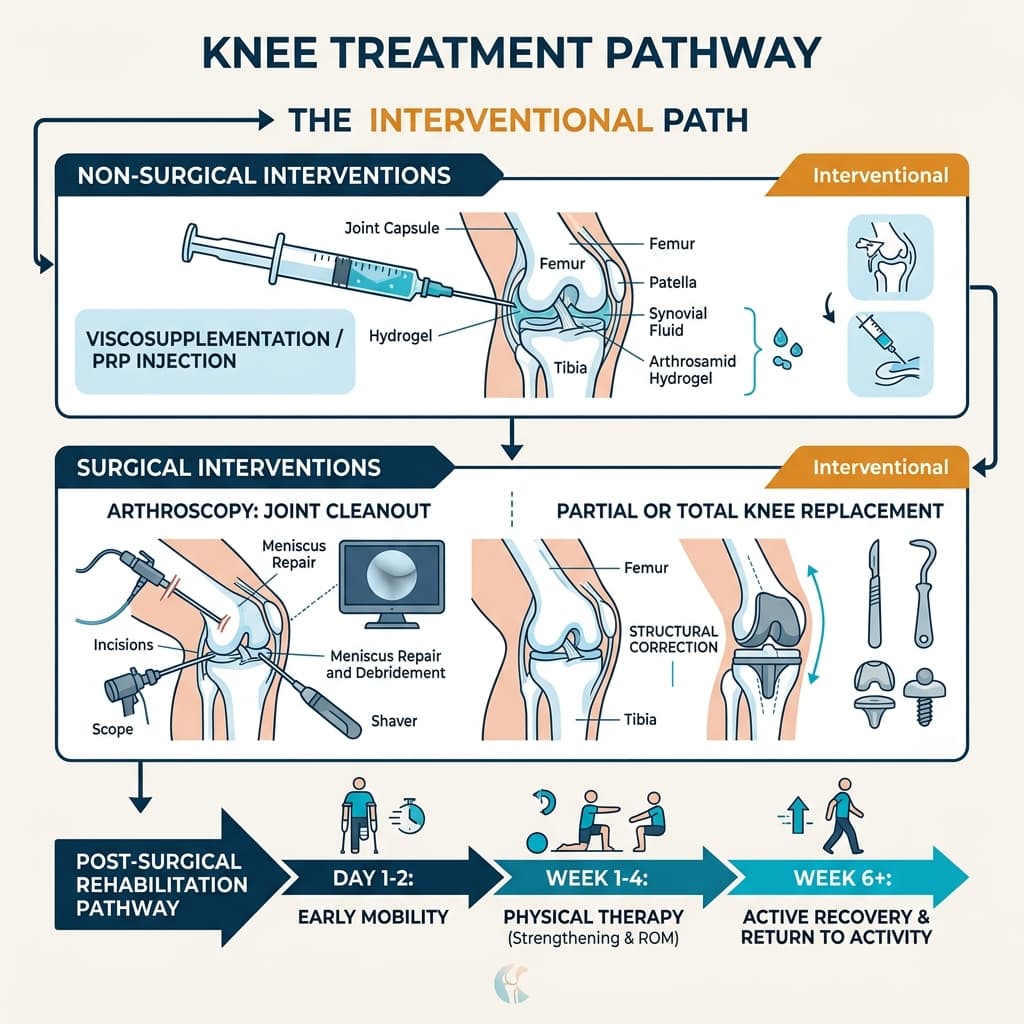
Clinical Pathway Map

Staged treatment and recovery journey.

Anatomy Comparison

Management Strategy Comparison

Comparing conservative treatment with active intervention options.
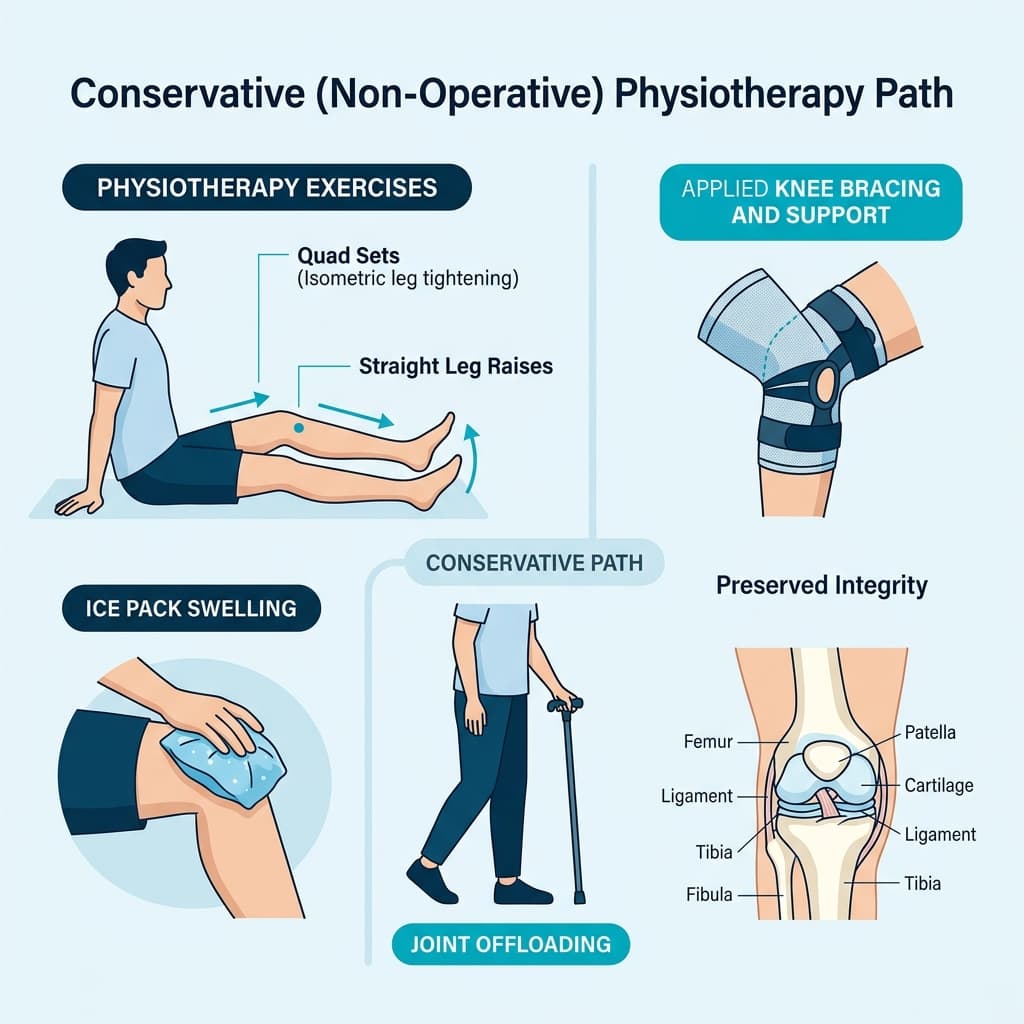
Conservative Path
Conservative PathConservative PathClinical Reference
Interventional Path (Intervention Options)
Interventional PathInterventional PathClinical Reference
Primary Focus

Conservative Path

Symptom management, quad strength, offloading

Interventional Path

Structural correction, joint resurfacing or repair

Timeframe

Conservative Path

Gradual ongoing adaptation over 3-6 months

Interventional Path

Structured acute healing followed by targeted rehab

Expected Outcome

Conservative Path

Improved function and pain control, preserved anatomy

Interventional Path

Restored mechanical stability, reconstructed tissue

Frequently Asked Questions

Physiotherapy is recommended for almost all knee patients, either as a primary non-surgical treatment or as a critical part of recovery following a surgical procedure.
A typical program ranges from 6 to 12 weeks of structured sessions, combined with a home exercise plan. Chronic conditions or post-surgical rehab may require longer.
Appropriate low-impact exercise does not make arthritis worse. It strengthens surrounding muscles to reduce the load on the joint surfaces, helping to manage pain.
For private self-paying consultations, a referral is not required. However, private medical insurance providers often require a referral to authorize coverage.
Clinically Reviewed
Mr Ricardo J Pacheco (GMC 4145976)Consultant Trauma & Orthopaedic Surgeon
Last reviewed: 29 July 2026
References
  1. NHS — Physiotherapy
  2. Evidence review for preoperative rehabilitation - NCBI Bookshelf (ncbi.nlm.nih.gov)
  3. NICE recommends rehab on same day as surgery for joint ... (csp.org.uk)
  4. Evidence review for inpatient hip and knee postoperative ... (ncbi.nlm.nih.gov)
  5. Clinical and cost-effectiveness of physiotherapy interventions ... (link.springer.com)
  6. Total Knee Arthroplasty Rehabilitation Guidelines (sportssurgeryclinic.com)
  7. American Academy of Orthopaedic Surgeons (pure.johnshopkins.edu)
  8. Rehabilitation Guidelines (rnoh.nhs.uk)

Would you like to discuss your treatment options?

A consultation can help clarify the cause of your symptoms and discuss appropriate treatment options.

Face-to-face appointments are arranged through the reception team at the chosen clinic. Video consultations use Google Calendar where available.

Continue Your Knee Journey

Next Step: Recovery & Rehabilitation

Understand recovery milestones, physical therapy timelines, and guidelines for returning to daily activities, driving, work, or sports safely.

Explore Recovery

Get notified about new content on Physiotherapy & Rehabilitation

We'll only email you about updates on this specific topic — unsubscribe anytime.

Medical Disclaimer

This website provides educational and general information about knee symptoms, conditions, and treatments. The content is for informational purposes only and does not constitute medical advice, diagnosis, or a treatment plan. It should not be used as a substitute for a professional consultation, examination, or clinical decision-making by a qualified orthopaedic specialist.

If you are experiencing symptoms or are concerned about a knee problem, please arrange a clinical consultation. If you have urgent symptoms, severe pain, or are unable to put weight on your leg, please read our urgent advice guidance or contact emergency services immediately (dial 999 or NHS 111).

Contact us on WhatsApp — for administrative enquiries only. Please do not send confidential medical information.