
Primary Focus
Conservative Path
Symptom management, quad strength, offloading
Interventional Path
Structural correction, joint resurfacing or repair
A clinical framework to manage pain using medication, lifestyle changes, and non-invasive methods.
Effective pain management supports active rehabilitation by reducing joint discomfort. This page explains clinical guidelines and management options.
Pain management involves using over-the-counter or prescribed analgesia, anti-inflammatories, local heat or cold applications, and load management strategies to keep discomfort at a level where daily tasks and physical therapy remain possible. Wording is cautious: medication details are general and depend entirely on a clinical review.
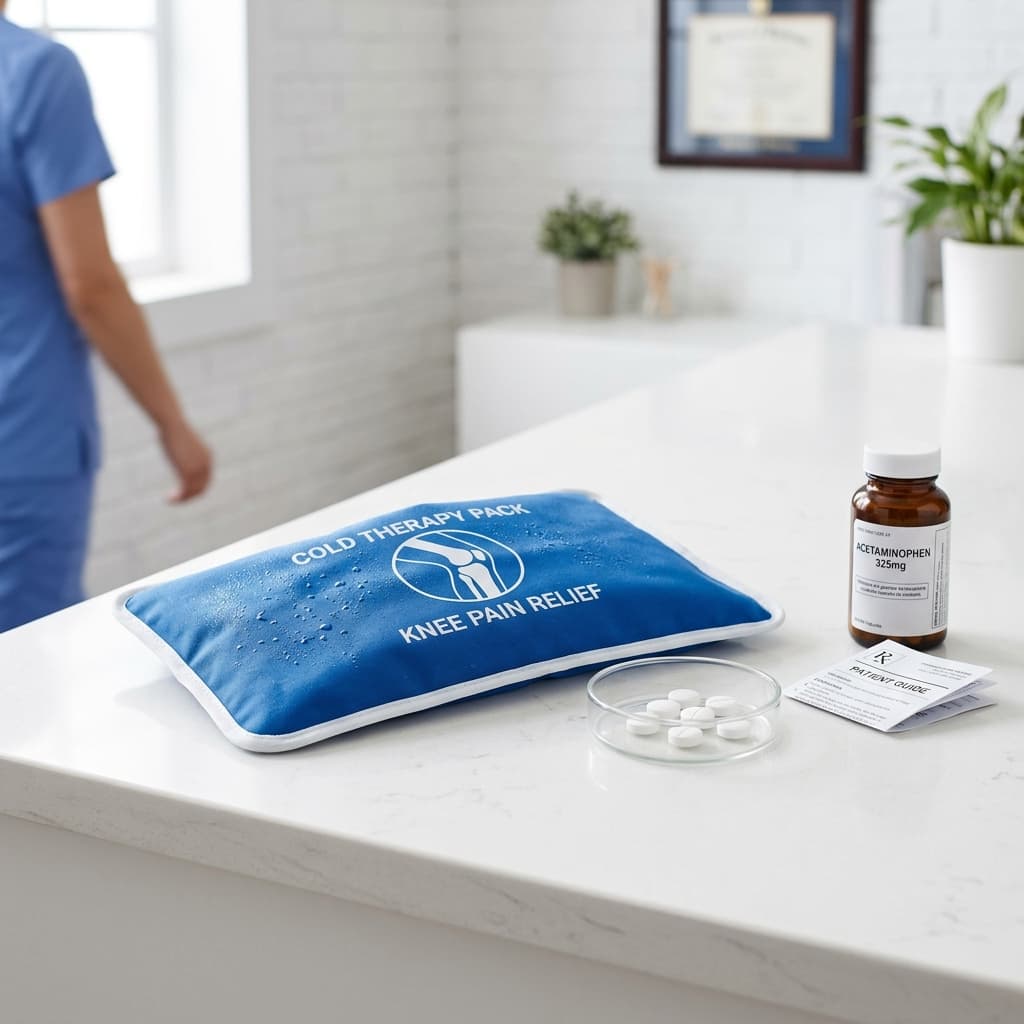
Typical clinical stages of this treatment pathway include:
Suitability depends entirely on an individual clinical examination, diagnostic imaging, medical history, and personal activity goals.
Alternative treatment pathways that may be considered depending on clinical severity:
As with any clinical intervention, risks and complications differ between patients. Suitability and risk profiles are discussed in detail during consultation. General risks associated with this procedure include:
Post-treatment rehabilitation and timelines are key to restoring joint health. We do not provide guaranteed recovery times.
Typical phase-based progression and return to functional activity guidelines.
Staged treatment and recovery journey.
Comparing conservative treatment with active intervention options.
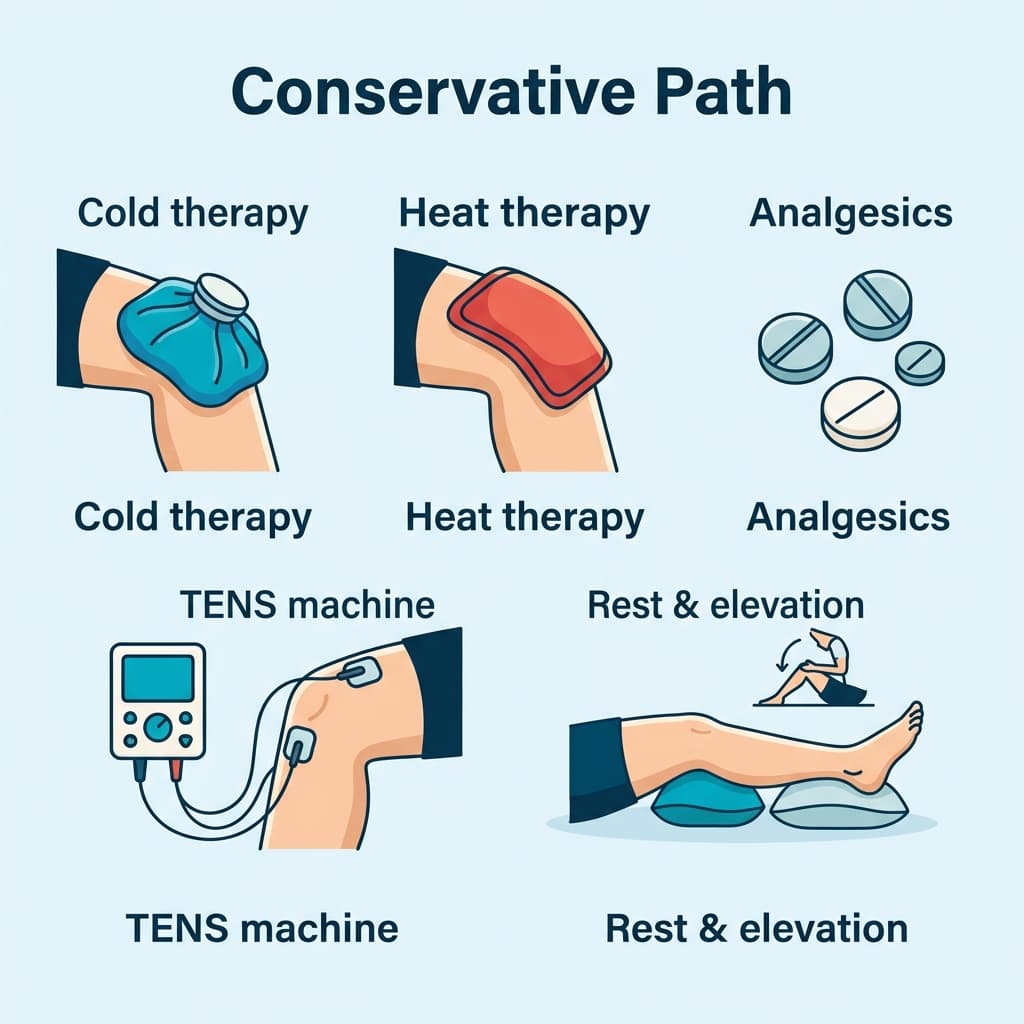 Conservative PathClinical Reference
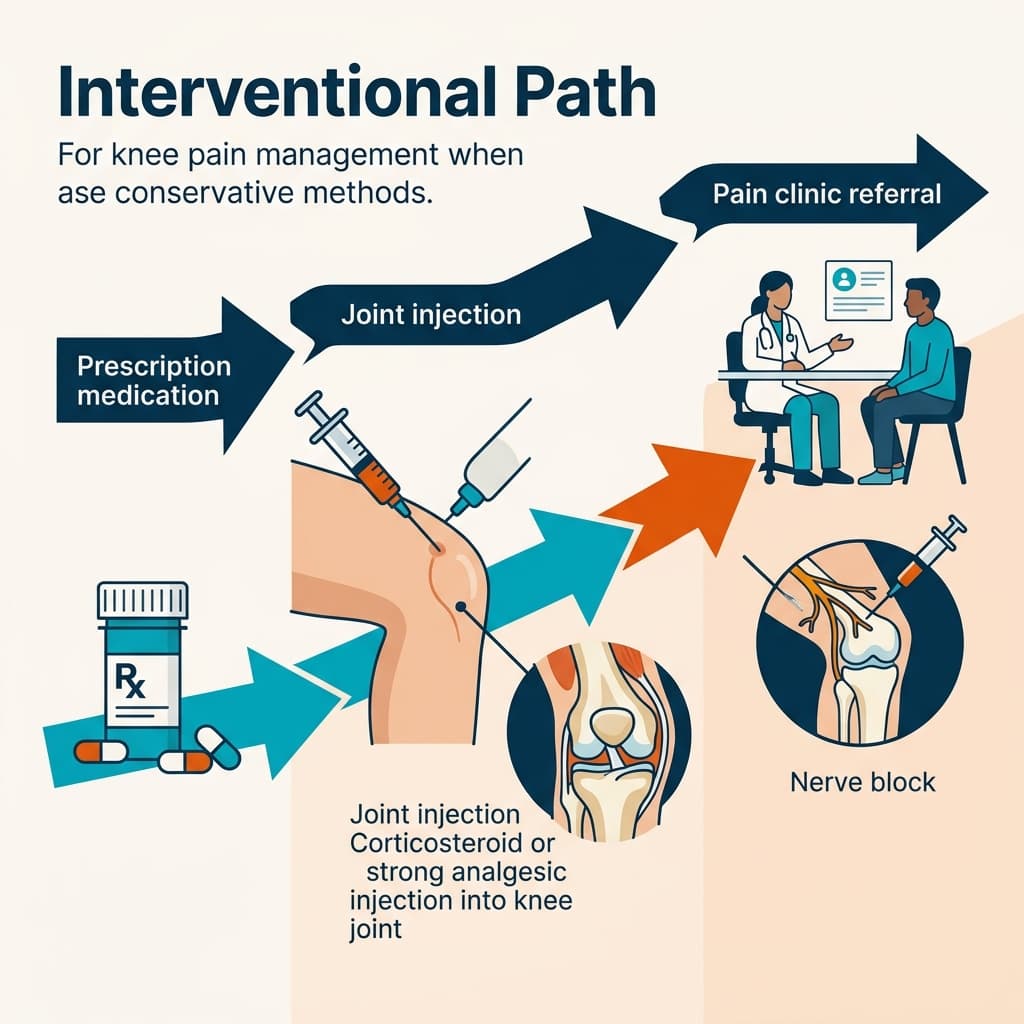 Interventional PathClinical Reference
Conservative Path
Symptom management, quad strength, offloading
Interventional Path
Structural correction, joint resurfacing or repair
Conservative Path
Gradual ongoing adaptation over 3-6 months
Interventional Path
Structured acute healing followed by targeted rehab
Conservative Path
Improved function and pain control, preserved anatomy
Interventional Path
Restored mechanical stability, reconstructed tissue
| Anatomical Feature | Conservative Path | Interventional Path |
|---|---|---|
| Primary Focus | Symptom management, quad strength, offloading | Structural correction, joint resurfacing or repair |
| Timeframe | Gradual ongoing adaptation over 3-6 months | Structured acute healing followed by targeted rehab |
| Expected Outcome | Improved function and pain control, preserved anatomy | Restored mechanical stability, reconstructed tissue |
This page is in draft and has not yet been formally reviewed by our clinical team. Content may change following clinical review.
A consultation can help clarify the cause of your symptoms and discuss appropriate treatment options.
Face-to-face appointments are arranged through the reception team at the chosen clinic. Video consultations use Google Calendar where available.
Understand recovery milestones, physical therapy timelines, and guidelines for returning to daily activities, driving, work, or sports safely.
Get notified about new content on Pain Management
We'll only email you about updates on this specific topic — unsubscribe anytime.
This website provides educational and general information about knee symptoms, conditions, and treatments. The content is for informational purposes only and does not constitute medical advice, diagnosis, or a treatment plan. It should not be used as a substitute for a professional consultation, examination, or clinical decision-making by a qualified orthopaedic specialist.
If you are experiencing symptoms or are concerned about a knee problem, please arrange a clinical consultation. If you have urgent symptoms, severe pain, or are unable to put weight on your leg, please read our urgent advice guidance or contact emergency services immediately (dial 999 or NHS 111).