
Key Takeaways
- Evidence shows that recreational running does not increase the risk of knee osteoarthritis.
- Running helps stimulate and strengthen joint cartilage by promoting fluid exchange.
- Elite or extremely high-volume running may increase wear, but recreational volumes are protective.
- A poor running gait, sudden mileage increases, and weak hips are the primary causes of running knee pain.
- Strength training and gradual progression are key to preserving your joints as a runner.
Debunking the Myth: Does Running Wear Out Your Joints?
For decades, one of the most common warnings given to runners is that the constant pounding will wear out their knees. The assumption seems logical: the knee joint bears several times your body weight with every stride, so repetitive impact must lead to cartilage wear and osteoarthritis.
However, modern clinical research has thoroughly debunked this myth. Large-scale epidemiological studies have tracked thousands of runners and non-runners over many years. The findings are clear: recreational runners actually have lower rates of knee osteoarthritis compared to sedentary individuals. Running is not a direct route to joint wear; in fact, the opposite is often true.
"Sedentary lifestyles pose a far greater risk to joint mobility and overall health than recreational running."
How Running Nourishes Joint Cartilage
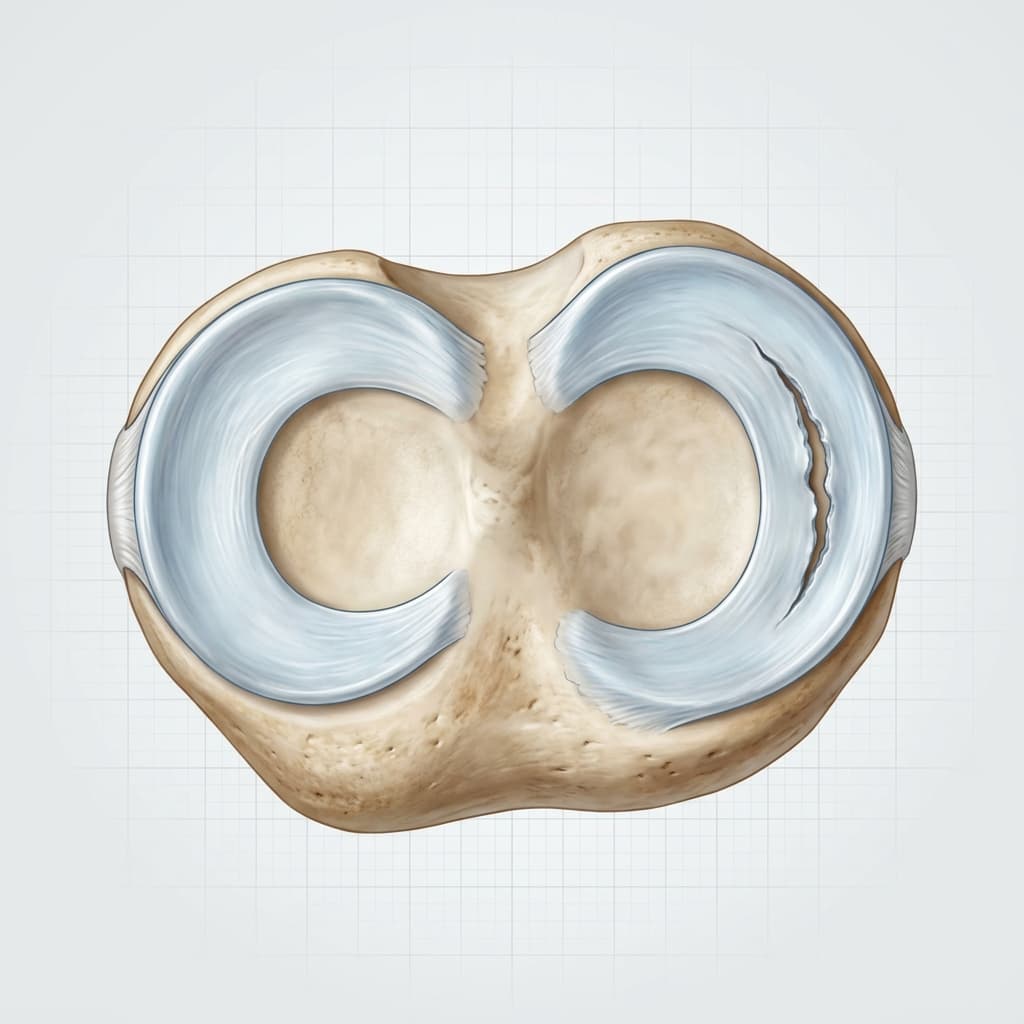
To understand why running does not destroy your cartilage, it helps to look at how joint cartilage functions. Cartilage does not have a direct blood supply. Instead, it relies on joint movement to stay healthy and nourished.
When you run, the cyclical compression and release of the joint acts like a pump. This action pushes old joint fluid out of the cartilage and draws in fresh, nutrient-rich synovial fluid. This process is essential for maintaining the thickness, elasticity, and health of the cartilage. Painless loading from recreational running helps condition the joint surfaces, making them more resilient to stress.
Cartilage Deformation and Volume Recovery Dynamics
In vivo magnetic resonance imaging (MRI) studies have allowed researchers to observe what happens to joint cartilage in real-time after a run. These studies reveal that knee cartilage undergoes transient deformation (a temporary compression of approximately 3% to 5% of its thickness) immediately following a 30-minute run.
Crucially, this deformation is entirely physiological and temporary. In healthy individuals, the cartilage fully recovers its original volume and height within 45 to 60 minutes of rest. Rather than indicating damage, this cyclic deformation and recovery cycle is exactly what stimulates the chondrocytes (cartilage cells) to synthesize new extracellular matrix proteins, effectively conditioning the cartilage to handle future loading. For semiprofessional runners, this recovery window emphasizes the importance of pacing and rest between high-intensity running blocks.
Biomechanical Calculations: The Cumulative Load Theory
A common misunderstanding in sports biomechanics is focusing solely on the peak impact forces of running compared to walking. While it is true that running produces peak joint contact forces of 6 to 8 times body weight compared to just 3 times body weight for walking, this does not tell the whole story.
When calculating the cumulative load over a set distance (for example, one mile), the total force experienced by the knee joint is remarkably similar between running and walking. This is because running involves a much longer stride length and shorter ground contact times. Therefore, a runner takes far fewer steps per mile than a walker. The shorter contact duration and reduced step count offset the higher peak forces, explaining why running does not place an excessive cumulative mechanical burden on the joint surfaces.
The Distinction: Recreational vs. Elite Mileage
While recreational running is highly beneficial, volume and intensity do play a role. Medical studies draw a clear distinction between different levels of running:
- •Recreational Runners: Running up to 25-30 miles per week is associated with a significantly lower rate of joint wear compared to sedentary individuals.
- •Elite or Competitive Runners: Very high mileage (such as running more than 50-60 miles per week competitively for years) or returning to run through existing joint injury can increase the risk of developing osteoarthritis.
For the vast majority of runners, their exercise volume falls well within the protective, healthy range. For semiprofessional athletes, managing this mileage boundary and balancing volume with cross-training is key to preserving joint health.
Why Do Runners Get Knee Pain?
If running is not bad for your knees, why is knee pain (such as runner's knee or patellofemoral pain syndrome) so common among runners?
The pain is rarely caused by the running itself, but rather by mechanical or training errors:
- •Sudden Training Spikes: Increasing your weekly mileage or intensity too quickly does not give the tendons and cartilage enough time to adapt.
- •Weak Stabilizing Muscles: Weakness in the hip abductors and glutes can cause the thighbone to rotate inwards, leading to abnormal kneecap tracking.
- •Improper Running Gait: Over-striding (landing with your foot too far in front of your body) acts as a brake, sending high impact forces straight up to your knee.
Practical Training Strategies for Joint Preservation
Semiprofessional runners can mitigate joint stress and optimize performance by implementing specific, evidence-based biomechanical adjustments:
- •Increase Running Cadence: Increasing your step rate by 5% to 10% (targeting 170 to 180 steps per minute) decreases stride length without slowing you down. This significantly reduces the peak impact forces at the knee joint and hip.
- •Quadriceps and Gluteal Conditioning: Incorporating heavy, slow-resistance strength training (such as squats, lunges, and single-leg presses) twice a week builds the muscle support needed to absorb joint impact.
- •Gradual Progression Rules: Adhere strictly to progressive loading principles, ensuring that weekly running volume increases by no more than 10% to allow cartilage and tendon remodeling to keep pace with mechanical stress.